
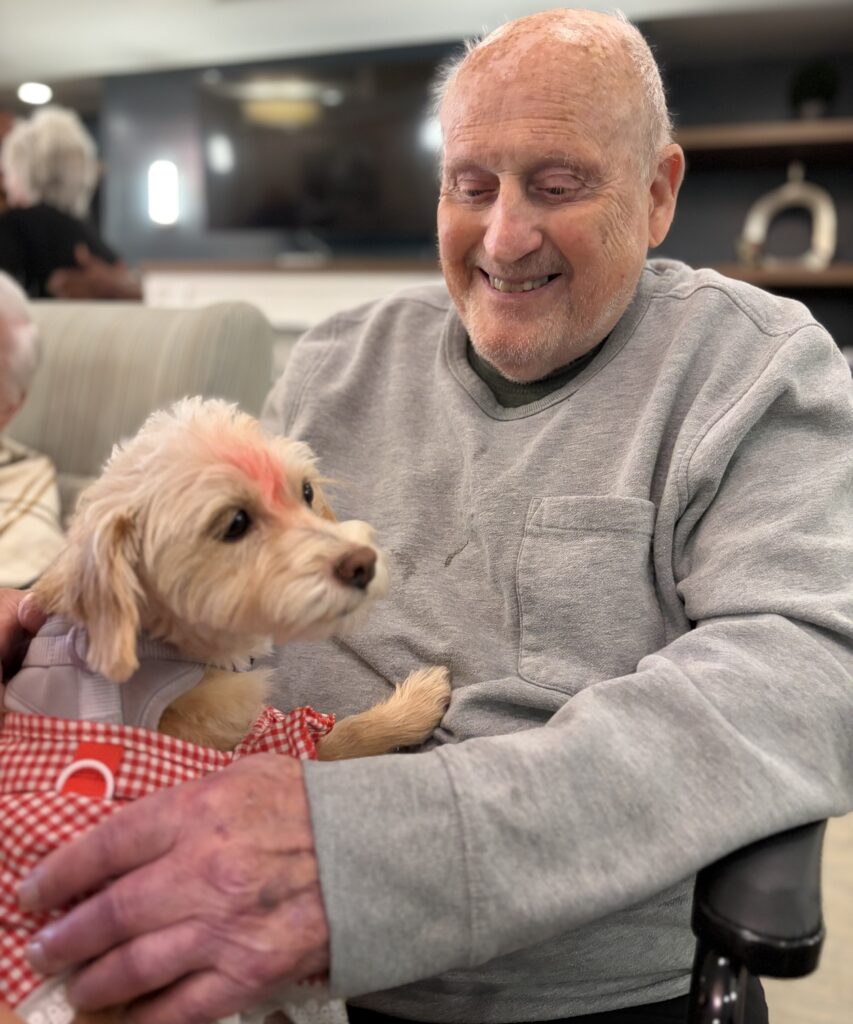
Sometimes the Best Medicine Has Four Legs, a Wagging Tail, and Unconditional Love.
Whether living independently at home or in a senior living community, interaction with animals can have a remarkable impact on a person's emotional well-being. For older adults, especially those living with Alzheimer's disease or other forms of dementia, the bond between people and animals can often transcend words.

Pets provide companionship that may help ease feelings of loneliness, stress, and anxiety. For someone who has always loved animals, simply petting a dog or cat can be a calming experience and a chance to connect with another living being.
Not every meaningful interaction requires conversation. A resident might smile at a familiar dog, reach out to stroke its fur, or begin telling a story about a pet from childhood. These moments can be especially welcome when finding words has become more difficult.
At Argento Westchester, we recognize how much familiar relationships and activities matter in personalized memory care in Los Angeles. Animal companionship is one way residents and families may enjoy meaningful time together.
How Pets Can Support People Living With Dementia
Animals have a way of making people feel welcome without asking much in return. For someone living with dementia, that uncomplicated companionship can be particularly meaningful.
Petting an animal may offer a soothing sensory experience. Its familiar movements, warmth, and presence can provide a gentle focus for attention. Some people become more talkative around pets, while others simply enjoy sitting quietly beside them.
Animal-assisted activities have been explored in dementia care for their potential to support mood, social interaction, and engagement. Research has reported encouraging results in some small studies, although the evidence remains limited and these activities should not be presented as medical treatment or a substitute for appropriate dementia care.
Small Interactions Can Carry Personal Meaning
Imagine a resident who spent years raising dogs. They may no longer remember every detail of yesterday, but the sight of a friendly dog can still feel familiar. Reaching out to touch its fur or talking about an old family pet may become a moment of connection.
The experience matters even when a resident doesn't respond in the way a visitor expects. Quietly watching an animal can be just as enjoyable as actively petting or playing with it.
The National Institute on Aging's guidance on activities for people with Alzheimer's disease includes interacting with pets among activities that families can adapt to a person's interests and abilities.
For families learning more about different types of support, Argento's dementia care services in Los Angeles emphasize individualized routines, familiarity, and meaningful engagement.
How Caring for a Pet Can Bring Structure to the Day
Dogs can inspire movement. For an older adult who can safely manage it, walking a dog may provide a reason to get outside and remain physically active. Even sitting with a pet, brushing its fur, or helping prepare its food can be enjoyable.
In the earlier stages of dementia, familiar pet-care routines may offer a sense of purpose. Someone who has spent years feeding, grooming, or playing with animals may enjoy continuing those activities with appropriate supervision and support.
As dementia progresses, the responsibilities of caring for a live animal may become more difficult. A person may have trouble remembering feeding schedules or safely managing an energetic pet. Families can adapt the activity so their loved one continues enjoying companionship without carrying responsibilities that have become overwhelming.
Simple Animal Activities to Consider
Gentle Petting
Invite the person to stroke a calm, comfortable animal if they want to. Watch for signs of enjoyment or discomfort, and allow the interaction to end whenever they wish.
Brushing and Grooming
Someone who once enjoyed caring for pets may appreciate brushing a suitable animal with help from a family member or caregiver.
Reminiscing About Family Pets
Photos or a visiting dog may prompt memories of beloved animals, childhood experiences, or family routines. Follow the resident's lead rather than testing their memory.
Walking or Watching Animals
For those who are able, a short supervised walk with a suitable pet can offer movement and fresh air. Others may enjoy watching a dog explore or play from a comfortable seat.
These kinds of activities reflect the importance of meeting residents where they are. The activities available at Argento Westchester are built around individual interests, abilities, and opportunities for meaningful participation.
Pet Visits and Animal-Assisted Activities in Memory Care
As dementia progresses, caring for a live pet can become more challenging. Fortunately, the enjoyment of animal companionship doesn't have to end.
Some senior living communities arrange visits with trained animal-and-handler teams. These visits can give residents an opportunity to spend time with friendly dogs in a setting where the animal's behavior and the resident's comfort are considered.
Families may also bring well-behaved pets for visits when community policies permit. A familiar dog can be a wonderful part of a family visit, particularly when the resident and animal have a long relationship.
A casual pet visit is primarily about companionship and enjoyment. Animal-assisted therapy is generally a more structured intervention involving defined goals and an appropriately qualified professional or team. The terms shouldn't be used interchangeably, and not every visit with an animal is a clinical therapy session.
Families should ask prospective communities about animal-visit rules, supervision, and how visits are adapted for residents with different cognitive or physical abilities.
If your family is comparing settings for a loved one, our article What to Look for During an Assisted Living Tour in Los Angeles includes practical questions about resident activities, daily routines, and individual care.
Lifelike and Robotic Companion Pets for People With Dementia
Even when a live animal isn't practical, some people enjoy the comfort of a lifelike companion pet.
Realistic stuffed cats and dogs, along with interactive models that simulate purring, movement, or a heartbeat, can offer a familiar sensory experience. Someone who once cared for animals may find it comforting to hold or gently stroke a companion pet.
These products may be especially meaningful for individuals who can no longer safely manage a live animal or whose living circumstances make pet ownership impractical.
Early studies of robotic companion animals suggest possible short-term benefits for mood, agitation, or engagement among some people with dementia, but results are not consistent enough to promise a particular outcome.
Follow the Resident's Response
Some people enjoy realistic companion animals immediately. Others may find them confusing, uninteresting, or upsetting. A resident's preferences should guide whether one is offered.
Let the person decide whether to hold or interact with the companion animal. It should be an invitation to enjoy a comforting activity, never an obligation.
The broader goal of specialized Alzheimer's care in Los Angeles is to support each individual's well-being with routines and activities suited to their needs and personal history.
Making Animal Visits Comfortable and Safe
Not everyone enjoys being around animals, and dementia can change how a person reacts to unfamiliar situations. A thoughtful pet visit accounts for both the resident and the animal.
Questions Families Should Consider
- Does the resident enjoy animals, or do they have a history of fear or discomfort around pets?
- Are there allergies, infection-control precautions, or other health considerations?
- Is the visiting animal calm, healthy, appropriately supervised, and comfortable around people?
- Could the animal's size or movement create a fall risk for the resident?
- Does the resident have a quiet place to step away if the interaction becomes overwhelming?
- Are visitors familiar with the community's policies for bringing pets?
Residents should always have the option to decline a visit. A familiar pet may be a source of joy for one person and an unwelcome surprise for another.
These considerations become especially important for people who need more supervision with everyday routines. Families who are evaluating residential care may also find our guide on signs a parent may need assisted living helpful when discussing changing needs.
Pawsitive Moments at Argento Westchester
At Argento Westchester, we understand that pets are family. As a pet-friendly community, we welcome the companionship that animals bring and recognize the role they can play in helping residents feel more at home.
Whether it's a resident's beloved pet, a planned animal visit, a family member bringing a friendly dog, or the comforting presence of a lifelike companion animal, these interactions can create smiles, spark memories, and encourage meaningful connections.
For people living with Alzheimer's disease or another form of dementia, there is value in recognizing the person behind the diagnosis. A former dog owner may still love the feel of soft fur beneath their hand. Someone who has difficulty following a long conversation may enjoy quietly watching a pet nearby.
Our memory care community in Los Angeles places importance on residents' histories, preferences, and personal routines. Animal companionship can fit naturally into that philosophy when it is appropriate for the individual and consistent with community policies.
Contact the Argento team before bringing an animal so you can review current visiting rules and any arrangements needed for a comfortable experience.
Argento Westchester is located at 7501 Osage Avenue in Los Angeles. Families researching assisted living near Culver City or assisted living near Santa Monica can visit our Westchester location to learn more about personalized care and resident activities.
If you're comparing senior living communities, our guide to what makes a great assisted living facility in Los Angeles
Sometimes the greatest gift we can offer is a warm connection, a wagging tail, a gentle purr, and the unconditional affection that an animal can bring.
Come See Our Community
Learn more about memory care, everyday activities, and the individualized support available at Argento Westchester. Our team can answer your questions and arrange a visit.
Argento Westchester Assisted Living & Memory Care
7501 Osage Avenue, Los Angeles, CA 90045
(424) 262-8968
Frequently Asked Questions About Pets and Dementia Care
Can Spending Time With Pets Help People Living With Dementia?
For some people, spending time with animals may provide comfort, enjoyment, and opportunities for social interaction. Familiar animals can also encourage conversation or reminiscence.
Research on animal-assisted interventions in dementia care is promising in some areas but still limited. Animal companionship should be considered an optional enrichment activity, not a replacement for appropriate healthcare or dementia support.
Are Therapy Dogs Appropriate for Memory Care Residents?
Visits from suitable, well-supervised dogs may be enjoyable for residents who like animals. Communities should consider each resident's preferences, allergies, mobility, cognitive needs, and comfort before arranging a visit.
Ask the community whether it offers organized visits, how animals and handlers are screened, and how the activity is supervised.
What If a Person With Dementia Can No Longer Care for a Pet?
Families can look for ways to preserve enjoyable animal interactions without requiring the person to manage feeding, exercise, grooming, or veterinary responsibilities independently.
Supervised visits, time with a family pet, photographs, and lifelike companion animals may provide alternatives depending on the person's interests and abilities.
Can Robotic Companion Animals Provide Comfort to Someone With Alzheimer's?
Some people living with Alzheimer's disease enjoy lifelike robotic cats or dogs that move or make sounds. These products may offer sensory stimulation and a familiar activity.
Responses vary, and a companion animal should be introduced gently. If the person appears confused, distressed, or uninterested, respect their reaction and try a different activity.
Can Families Bring Pets When Visiting Argento Westchester?
Argento Westchester describes itself as a pet-friendly community and recognizes the importance of animal companionship for many residents and families.
Before bringing a dog or another animal, contact the Argento team or call (424) 262-8968 to confirm current visiting arrangements, pet policies, and any necessary precautions.