

Choosing an assisted living community involves dozens of decisions, but one of the most personal is where your loved one will live within that community. It will be their space to relax, sleep, keep treasured belongings, and spend time with family. Whether that space is private or shared can make a meaningful difference in how comfortable they feel.
When comparing private room vs shared room assisted living arrangements, families often start with the monthly price. Cost matters, especially in Los Angeles, but so do sleeping habits, privacy, personality, and the amount of assistance someone needs throughout the day.
Some older adults love having a room entirely to themselves. Others are comfortable sharing and may even enjoy having another person nearby. Understanding the differences helps families make a decision that reflects the person who will actually live there.
Private Room vs. Shared Room Assisted Living: Understanding the Differences
Assisted living communities offer different residential layouts. A private bedroom may be part of an apartment or suite, while shared accommodations generally involve two residents occupying the same bedroom. The exact arrangements depend on the property.
What Is a Private Room in Assisted Living?
A private room gives one resident their own sleeping and personal living space. They can arrange belongings, follow preferred routines, and enjoy time alone without accommodating a roommate's schedule.
However, private does not necessarily mean an entire apartment or a private bathroom. Some communities have single bedrooms with shared bathrooms or common living areas. Ask to see the specific room being offered rather than relying on the room category alone.
What Is a Shared Room in Assisted Living?
Shared accommodations typically involve two residents occupying one bedroom, each with an individual bed and personal storage.
Residents may share a bathroom, depending on the layout. They also need to consider one another's routines, visitors, lighting preferences, and use of shared space.
Shared accommodations can work well for compatible residents, but compatibility deserves attention. Two people can have similar care needs while preferring very different sleeping schedules or levels of activity.
| Consideration | Private Room | Shared Room |
|---|---|---|
| Sleeping Space | Individual bedroom | Bedroom shared with another resident |
| Privacy | Greater control over personal space | Requires consideration of a roommate |
| Companionship | Social contact primarily by choice | Opportunities for everyday roommate interaction |
| Daily Routines | More flexibility | May require compromise |
| Cost | Often higher | May be lower, depending on the community |
| Bathroom | Must be confirmed | Must be confirmed |
A private bedroom may still share a bathroom with another resident. Likewise, some shared accommodations may have features that differ substantially from what you expect. Ask to view the actual available room before making a decision.
Private Room Assisted Living Benefits for Seniors and Families
For someone who has lived independently for many years, moving into assisted living already involves adjusting to a different environment. Having a space that feels distinctly their own may make that transition easier.
The most meaningful private room assisted living benefits often involve ordinary parts of the day that families might not initially consider.
More Privacy and Personal Space
Many older adults value having somewhere to close the door, take a phone call, read, or simply enjoy quiet time.
Privacy can also matter during visits. A resident may feel more comfortable speaking with their children about personal concerns or spending time with grandchildren without worrying about disturbing another person.
Greater Control Over Sleep and Daily Routines
One resident may enjoy watching television before bed, while another prefers complete silence. Some people wake early, while others sleep late.
With private rooms in assisted living, residents generally have more freedom to follow their preferred schedules without negotiating every small detail with a roommate.
That flexibility can be particularly valuable for individuals who are sensitive to noise or whose sleep is frequently interrupted.
A Familiar Space to Make Your Own
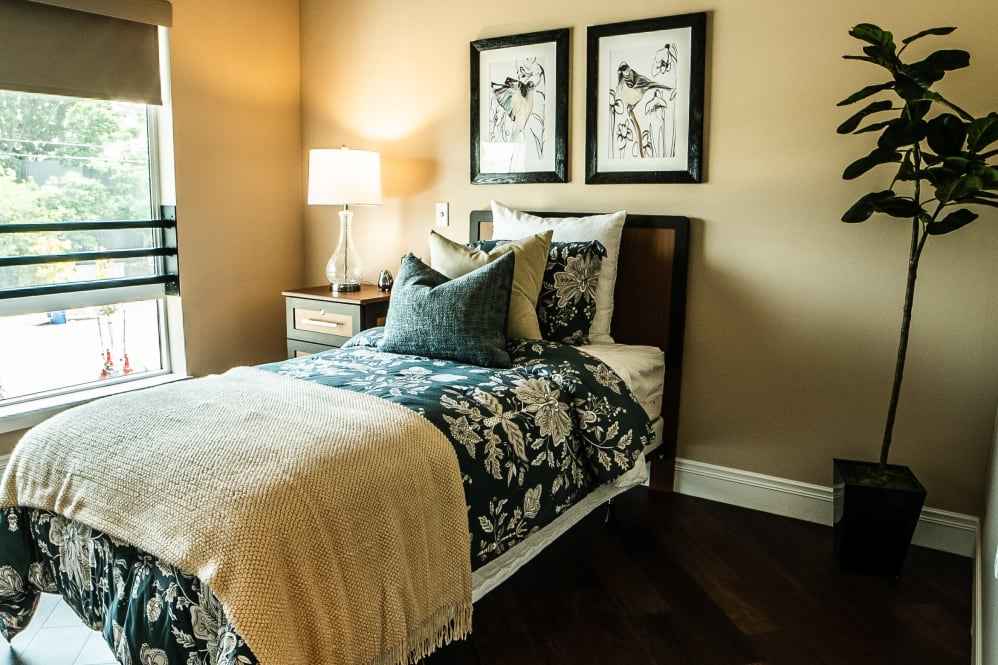
Photographs, favorite blankets, familiar artwork, and small personal furnishings can make a new residence feel more like home.
Assisted living private rooms may give residents greater freedom to arrange these possessions around their own preferences, subject to the facility's furnishing and safety policies.
An armchair beside a window or photographs on a bedside table may seem like a small detail, but familiar surroundings can be reassuring during a significant life change.
Privacy During Personal Care
Some residents need assistance with dressing, bathing, or other personal activities. Privacy and dignity matter regardless of whether someone has a private or shared bedroom.
A private accommodation can make certain routines more straightforward, although communities must still protect residents' privacy when care is provided in shared settings.
A private bedroom doesn't automatically mean better care, more attentive staff, or greater independence. Those depend on the community's practices and how well its services match the resident's needs.
Are There Disadvantages to Assisted Living Private Rooms?
Private rooms are attractive to many families, but there are tradeoffs.
The most obvious is price. A community may charge more for an individual bedroom, particularly when accommodations are limited or include additional space.
Some residents may also prefer the everyday presence of another person. Someone who has shared a home with a spouse for decades might find a quiet room unfamiliar, especially during the first few weeks.
Of course, living alone in a bedroom does not mean being socially isolated. Residents can still enjoy communal dining, scheduled activities, shared lounges, and regular visits from family.
The important question isn't whether assisted living private rooms are generally better. It's whether the arrangement matches your loved one's habits, expectations, and comfort level.
Privacy and Social Connection Can Coexist
Residents with private bedrooms can still participate in group meals, activities, and everyday conversations throughout the community.
When comparing residential settings, ask how the community helps people maintain friendships and participate in activities they enjoy.
For a broader look at daily community life, read our guide to what makes a great assisted living facility in Los Angeles .
Benefits and Challenges of Shared Rooms in Assisted Living
Shared rooms deserve thoughtful consideration rather than being dismissed as simply the less expensive option.
For certain residents, sharing a space may feel natural. Others may find it difficult to adjust. Much depends on the people involved and how the community handles roommate arrangements.
Everyday Companionship
A compatible roommate may provide familiar conversation, shared interests, and a friendly presence.
For someone who enjoys talking in the evening or greeting another person in the morning, this can be pleasant. A roommate may also help a new resident feel less alone during the transition.
However, companionship isn't guaranteed simply because two people occupy the same room. Some roommates become friends; others prefer to maintain separate routines.
Potentially Lower Accommodation Costs
Some communities offer shared rooms at a lower accommodation rate than individual rooms.
That difference may help families manage expenses, particularly when personal-care fees or other services add to the monthly bill.
Always ask for the total price per resident. A lower advertised room rate may not include every service your loved one requires.
Personal Boundaries and Compatibility
Sharing a bedroom means making room for someone else's habits.
One resident might enjoy visitors throughout the afternoon while another prefers a quiet environment. Differences in television volume, sleeping schedules, temperature preferences, and personal belongings can create friction.
Ask how the community considers resident preferences when assigning roommates and how concerns are addressed.
What if a Shared Room Doesn't Work Out?
Even compatible roommates may develop different needs over time.
Before accepting shared accommodations, find out whether residents can request another roommate or move to a different room. Ask about availability, possible fees, and the process for resolving disagreements.
A clear explanation of these policies can make the decision less stressful.

Comparing the Cost of Private and Shared Assisted Living Rooms in Los Angeles
The monthly cost of senior living involves more than the bedroom itself.
When comparing assisted living accommodations in Los Angeles, ask each community to distinguish the housing charge from any fees associated with care and additional services.
Depending on the community, a monthly rate may include meals, housekeeping, laundry, activities, and certain levels of personal assistance. Other services may be charged separately or adjusted after an individual care assessment.
A room that initially appears less expensive could end up costing more than expected if important services aren't included.
Questions to Ask Before Comparing Room Prices
Request written information about how rates are reviewed and when residents are notified of changes.
The goal is to understand the realistic ongoing expense rather than choosing based on one attractive monthly figure.
Contact our team to ask about current accommodations, care assessments, availability, and pricing.
Find a Comfortable Place to Call Home
Every resident has different needs and preferences. Schedule a visit to Argento Westchester to discuss available accommodations and the care options that may be appropriate for your loved one.
How Room Arrangements Affect Independence, Mobility, and Memory Care
The right bedroom layout should support a resident's everyday activities as well as their preferences.
A beautiful room may not be practical if someone cannot comfortably maneuver a walker around the furniture or reach the bathroom safely.
Mobility and Accessibility
Consider the distance between the bed, bathroom, closet, and doorway. Ask whether the layout accommodates walkers or wheelchairs and whether mobility equipment can be stored without blocking walking paths.
For residents who need physical assistance, caregivers also need sufficient space to provide support safely.
A well-designed shared bedroom can sometimes be more practical than a poorly arranged private one. Evaluate the actual layout.
Sleep and Personal-Care Routines
Some residents wake during the night to use the bathroom or receive assistance.
In a shared bedroom, these routines can affect the other occupant. Lighting, conversation, and caregivers entering the room may interrupt sleep.
A private room assisted living arrangement may be worth exploring if nighttime interruptions are a significant concern, although the appropriate choice still depends on the person's needs.
Memory Loss and Cognitive Changes
For someone living with Alzheimer's disease or another form of dementia, familiarity and predictable routines may be especially important.
One person may feel reassured by a roommate's presence. Another may become distressed by unfamiliar activity or have difficulty understanding why someone else is using the room.
Neither arrangement is automatically best for every person with dementia.
Families should discuss cognitive, behavioral, and safety considerations with the care team before selecting accommodations.
Bedroom arrangements should be considered alongside the level of supervision, familiar routines, and individualized assistance a resident may need.
Learn more about Argento's memory care services and Alzheimer's care in Los Angeles when exploring residential support for someone with memory-related needs.
Which Assisted Living Room Arrangement Is Right for Your Loved One?
A helpful way to approach the private room vs shared room assisted living decision is to think about your loved one's life before the move.
Were they happiest spending quiet afternoons reading alone? Did they enjoy an active household? Do they prefer an early bedtime, or are they accustomed to watching television late into the evening?
A Private Room May Be Worth Considering When...
The resident strongly values quiet and personal space.
They have a highly individualized sleep schedule or enjoy time alone between social activities.
They want more flexibility when family members visit, or personal belongings and familiar surroundings are especially important.
A Shared Room May Be Worth Considering When...
The resident enjoys frequent casual interaction and feels comfortable sharing sleeping accommodations.
Roommate compatibility can be appropriately addressed, and the resident is comfortable coordinating daily routines with another person.
The arrangement also needs to fit the resident's preferences and available budget.
Budget matters, but personal preference deserves real weight.
When possible, involve the prospective resident in the decision. Walk through the available rooms together and ask what feels comfortable. They may notice details others overlook, such as the amount of daylight, the bathroom location, or space for a favorite chair.
The best arrangement is one that combines appropriate care with a living environment the resident can genuinely feel at home in. Whenever possible, include their opinions in the final decision.
10 Questions to Ask When Touring Assisted Living Rooms in Los Angeles
Online photographs are useful for narrowing your search, but nothing replaces seeing the accommodations in person.
Bring these questions to your tour so you can compare each community consistently.
Assisted Living Room Checklist
Try to view an actual available room rather than relying entirely on a model or staged photograph.
It's also helpful to stand in the room for a few minutes. Notice noise from the hallway, natural lighting, electrical outlets, closet access, and the distance to shared community areas.
For additional guidance, read our assisted living tour checklist for Los Angeles families .
California Assisted Living Room and Roommate Rights
California Residential Care Facilities for the Elderly, commonly called RCFEs, must follow rules intended to protect resident safety and personal rights.
California's RCFE bedroom standards generally allow no more than two residents to sleep in one bedroom. Residents also have protections involving personal privacy and reasonable accommodation of room and roommate preferences.
California regulations address certain room-change notices, with exceptions depending on the circumstances. These protections do not mean every resident can demand an unavailable private room.
Review the Community's Written Policies
Before signing a residency agreement, ask about roommate selection, room-change procedures, fees, privacy, and how the facility responds to concerns.
For more information, review California Department of Social Services resources for senior care residents and families .
Exploring Assisted Living Accommodations at Argento Westchester
Choosing a room is only one part of finding the right senior living community. Families also want to know how daily assistance works, what activities residents can enjoy, and how the staff approaches individual preferences.
At Argento Westchester, we welcome conversations about these considerations before a family makes a decision.
Our assisted living and memory care community is located at 7501 Osage Avenue in Los Angeles, serving Westchester and surrounding Westside neighborhoods.
Families researching assisted living accommodations in Los Angeles can schedule a visit to explore our community, discuss individual needs, and ask about current room configurations, availability, and costs.
We also welcome inquiries from families searching for assisted living near Culver City or assisted living near Santa Monica . Both areas are served by our Westchester location.
While room layout matters, daily care, staff interactions, community atmosphere, and meaningful activities are equally important when evaluating a long-term living arrangement.
For a broader look at choosing a community, see our guides to finding the right assisted living facility in Los Angeles and what families should know about assisted living in West Los Angeles .
Visit Argento Westchester Assisted Living & Memory Care
A personal tour gives you an opportunity to meet our team, see the living spaces, and discuss the care and accommodations that may be appropriate for your loved one.
7501 Osage Avenue
Los Angeles, CA 90045
(424) 262-8968
Frequently Asked Questions About Private and Shared Assisted Living Rooms
Are Private Rooms More Expensive Than Shared Rooms in Assisted Living?
Private rooms often have higher accommodation charges than shared bedrooms, although pricing varies by community. Ask for an itemized quote that includes the room, care services, additional fees, and any anticipated changes in cost.
What Are the Main Private Room Assisted Living Benefits?
The main advantages include greater privacy, more control over daily routines, and the ability to personalize a living space without coordinating with a roommate. Whether these benefits outweigh the additional cost depends on the individual resident.
Can Residents Switch From Shared Rooms to Private Rooms?
A room change may be possible depending on availability, the community's policies, and applicable resident rights. Ask about the process, potential pricing differences, and whether there is a waiting list before signing an agreement.
Are Shared Rooms Suitable for Seniors With Dementia?
They can be appropriate for some individuals, but the decision should account for cognitive needs, sleep patterns, personal preferences, safety, and compatibility. A care assessment can help families understand which arrangements may be suitable.
How Can Families Compare Assisted Living Private Rooms During a Tour?
Look beyond square footage. Evaluate bathroom access, mobility, natural light, personal storage, noise, room location, and privacy during care. Compare the complete cost and ask whether the accommodation can continue meeting the resident's needs over time.
Finding the Right Space for Your Loved One
A bedroom may be only one part of an assisted living community, but it's an important part of feeling settled.
Take the time to view the options, listen to your loved one's preferences, and ask how each arrangement would work in everyday life.
The right choice should feel comfortable for the resident and practical for the family supporting them.